

Chief Directors Sensitized on the role of the Civil Service in the 24-Hour Economy Strategy
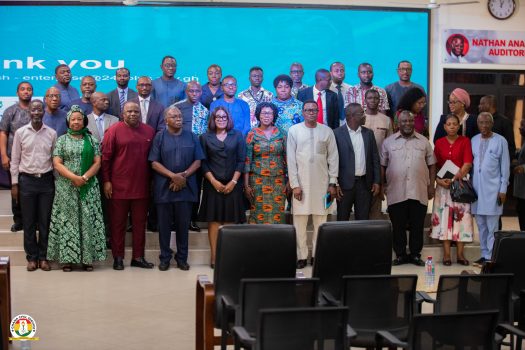
The Ghana Civil Service has held a sensitization workshop for Chief Directors and 24-Hour Economy Strategy Desk Officers to clarify the Service’s role in implementing the government’s flagship 24-Hour Economy policy. The session brought together senior officials to discuss the policy’s objectives and its implications for public sector delivery.
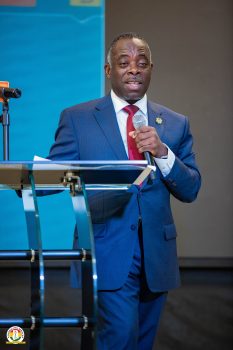
Addressing participants, the Head of the Civil Service, Dr. Evans Aggrey-Darkoh, described the 24-Hour Economy as a central government initiative designed to improve service delivery and accelerate economic growth. He said the strategy is intended to drive industrialization, boost exports, create jobs, and raise national productivity.
Dr. Aggrey-Darkoh outlined priority areas for round-the-clock operations, including driver licensing and vehicle roadworthiness services, port and airport operations, Volta Lake freight and passenger transport, 24-hour public bus services, and faster passport delivery.
He consequently urged Civil Service staff to translate the policy’s vision into concrete, measurable actions to ensure effective implementation and evaluation.
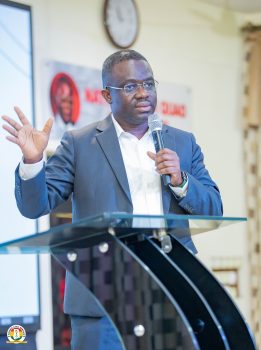
Presenting on the policy’s economic rationale, Mr. Abdul Nassir Alidu of the 24-Hour Economy Secretariat highlighted Ghana’s heavy reliance on imported food and manufactured goods, noting that nearly half of total imports were food items.
He said this dependence strains foreign exchange and constrains local production, adding that the 24-Hour Programme is a strategic response to these challenges.
He called on ministries and departments to integrate the policy’s targets into their plans and operations.
Speaking on behalf of his colleagues, the Chief Director at the Office of the Head of the Civil Service, Mr. Sylvanus Adzornu, indicated that the success of the policy was dependent on Chief Directors commitment, creativity, innovations leadership, and collaboration with the private sector.
He noted that, consistent with the mandate of the Civil Service, they would continue to provide professional assistance to government to build thriving nations where opportunities know no clock.